
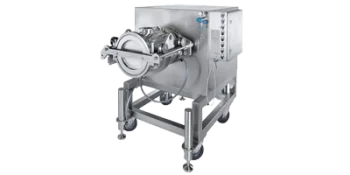


Drying, ultra-fine milling, graphite spheroidisation and high-shear mixing are key steps in preparing cathode and anode materials for lithium-ion batteries. Each step affects particle size, shape, flowability and electrochemical performance.

Menu

ADVANCED MATERIALS
Process technologies for tomorrow.
Process Systems for Battery Materials
Unlock next-level battery performance with Hosokawa Micron Group’s advanced powder processing technologies. From electric vehicles to energy storage, we help manufacturers meet growing demand with scalable solutions that improve efficiency, purity, and product consistency—while reducing energy use and production costs.
Whether producing cathode or anode materials, or developing solid-state batteries, our systems offer full control over particle size, morphology and moisture content. With decades of experience in ultra-fine milling, drying, spheroidising and high-shear mixing, we help you optimise battery life, charge speed and energy density.
Discover 'On': process technology for energy performance materials
Hosokawa Micron Group introduces ‘On’ — our dedicated line of processing systems for the production and refinement of energy performance materials. ‘On’ embodies the power, precision and process control we bring to battery material manufacturing.
Visit the Hosokawa 'On' website
Key battery processing technologies
Hosokawa Micron and its global sister companies supply proven powder technologies for key battery manufacturing steps—from precursor drying to final coating. Whether you work with lithium-ion, LFP, solid-state or next-gen batteries, our systems offer maximum precision, process safety and uptime.

Drying precursors for cathode materials
Before cathode materials or precursors such as nickel, cobalt or manganese oxides can be milled, they must be dried to specific moisture levels. For this, Hosokawa Micron offers several drying solutions, including:
- DMR flash dryer – for continuous drying of slurries and filter cakes
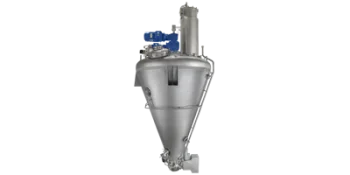
- Nauta® vacuum dryer – for batch drying of smaller quantities
- CPD conical paddle dryer – for difficult volatiles and ultra-low moisture levels

Ultra‑fine milling solutions for battery materials
To maximise battery performance—including faster charging, longer lifetime and higher usable capacity—active materials must be ultra-fine milled. This creates a narrow particle size distribution and increases surface area, both of which are essential for optimal electrochemical behaviour.
Hosokawa offers two key milling solutions widely used in the battery industry:
- ACM air classifying mill – precise particle size cut-off with built-in classifier
- AFG fluidised bed jet mill – contamination-free, high-efficiency micronisation
Both systems are ideal for processing cathode materials such as lithium cobalt oxide or manganese-based precursors, as well as anode materials including graphite and silicon.
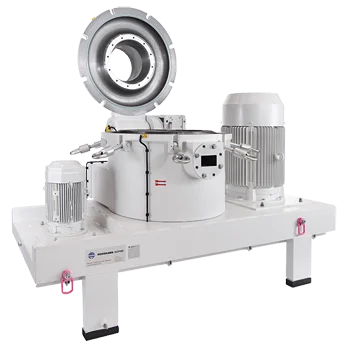
Graphite spheroidisation for higher tap density
Because of its naturally flaky structure and low bulk density, graphite must be spheroidised—rounded into compact shapes—to increase its packing efficiency and wettability, both of which are essential to battery capacity. Hosokawa Alpine offers two machines for rounding synthetic graphite and natural graphite:
- ZPS classifier mill – for spheroidising synthetic graphite
- APR particle rounder – for rounding natural graphite
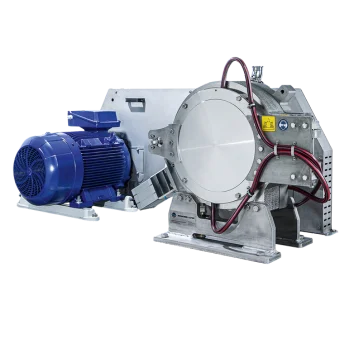
High-shear mixing and coating
High-shear mixing is essential for improving flow properties, reducing agglomeration, and applying uniform coatings to battery precursors. Hosokawa offers both batch and continuous solutions, tailored to your material behaviour and process requirements, including:
- Cyclomix – high-shear mixer
- Modulomix – continuous mixer
- Nobilta – super-high-shear mixer
- Mechanofusion – ultra-high-shear mixer
All mixers and mills are available with wear-resistant coatings for purity-critical processes.

ExpertTalk on battery production
Test before you invest
Run trials with your own materials at our Test Centres in the Netherlands and Germany. Depending on the process, testing can cover mixing and drying as well as milling, classification and particle rounding.
Our experienced process specialists work with you to determine the right process, equipment or system configuration for your application. Each trial is supported by a detailed technical report, helping you select the right solution with confidence.
Talk to our experts
Need help with your battery process? Our process technology specialists can advise you on the best equipment, seamless integration and performance improvements—tailored to your materials and production goals.

Our process solutions

FAQ – processing battery materials
Which powder processing steps are critical in battery material production?
What equipment does Hosokawa Micron offer for drying battery precursors?
We offer several drying technologies depending on the material and moisture requirements, including the DMR flash dryer, Nauta® vacuum dryer and CPD conical paddle dryer—suitable for nickel, cobalt and manganese oxide precursors.
Can Hosokawa equipment handle both cathode and anode materials?
Yes. Our systems are designed to process a wide range of materials, including lithium cobalt oxide (LCO), NMC and LFP for cathodes, as well as graphite and silicon for anodes.
Do you offer test facilities for battery material processing?
Yes. You can test your own materials at our fully equipped Test Centres in the Netherlands (2,000 m²) and Germany (3,000 m²). We also offer remote trials and rental equipment for on-site validation.
Is wear protection available for battery material processing equipment?
All Hosokawa mills and mixers can be supplied with optional wear-resistant coatings to maintain product purity and minimise contamination—especially important for sensitive active materials.
Sustainable process technologies
Hosokawa Micron B.V. is committed to sustainable and responsible process technology. Our environmental management system is certified to ISO 14001, while our EcoVadis Silver Medal places us among the top 3% of rated companies in the special-purpose machinery industry.
