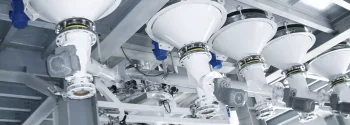

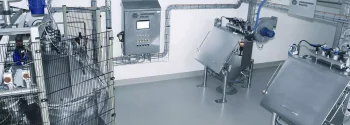
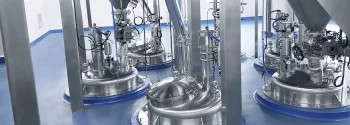
A pneumatic conveying system transports powders and bulk solids through enclosed pipelines using air or another process gas. It provides reliable material transfer between different unit operations while reducing dust emissions and improving process containment.

Menu

SOLIDS HANDLING
Process technologies for tomorrow.
Pneumatic Conveying Systems
Convey powders and bulk solids using pneumatic conveying systems designed around the material properties and the requirements of the overall powder processing system. Pneumatic conveying is widely used to transfer powders between different powder processing steps while maintaining product quality and process efficiency.
Selecting the appropriate pneumatic conveying system depends on factors such as conveying distance, throughput, particle size distribution, bulk density, abrasiveness, moisture sensitivity, product fragility and containment requirements. Hosokawa Micron provides the integration of pressure and vacuum pneumatic conveying systems as part of complete powder processing systems.
Selecting the Right Pneumatic Conveying System
Successful pneumatic conveying starts with understanding the behaviour of the powder rather than selecting a conveyor. Every material responds differently to conveying air velocity, pipeline geometry and pressure conditions. A system that performs well for one product may damage another or create unstable conveying conditions.
During system design, engineers evaluate characteristics such as particle size distribution, bulk density, flowability, moisture content, abrasiveness and product fragility. These properties determine the most appropriate conveying method, pipeline diameter, conveying velocity and product separation system. Designing the conveying system around the material rather than adapting the material to the equipment helps maintain product quality while reducing wear, energy consumption and maintenance.
Pressure and Vacuum Conveying
Pressure and vacuum conveying each have distinct advantages depending on the process requirements. Pressure conveying is generally selected for higher throughputs, longer conveying distances or multiple discharge points, whereas vacuum conveying is often preferred where dust containment, hygienic production or operator safety are critical.
The selection is rarely based on conveying distance alone. Product characteristics, containment requirements, plant layout and the interaction with upstream and downstream process equipment all influence the preferred conveying principle.
Integrated Powder Processing Systems
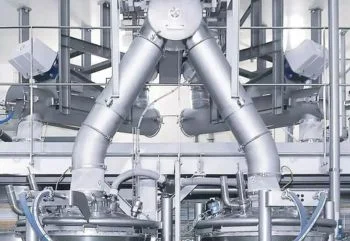
Pneumatic conveying rarely functions as a standalone operation. In most production facilities, it connects multiple unit operations and can be integrated with mixing, drying, agglomeration and size reduction as part of a wider powder processing system.
By considering the complete powder processing system during system design, conveying performance can be optimised alongside every other process step. This integrated engineering approach improves powder flow behaviour throughout the production process, reduces handling losses, simplifies plant operation and contributes to consistent product quality across the entire process.
Why Hosokawa?
Where pneumatic conveying forms part of a wider powder processing system, Hosokawa Micron provides the process integration while the conveying technology is supplied through Hosokawa Alpine Solids, the Hosokawa Group specialist in solids handling systems. For detailed technical information on the available pneumatic conveying systems supplied by Hosokawa Alpine Solids, please refer to their website:
Visit hosokawa-alpine.com
Talk to our experts
Let our process specialists help you develop the most suitable solution for your powder and bulk solids processing – from process evaluation to a full-scale industrial production system.

More System Solutions
FAQ – Pneumatic Conveying Systems
What is a pneumatic conveying system?
What is the difference between pressure and vacuum conveying?
Pressure conveying uses positive air pressure and is typically applied for higher capacities or longer conveying distances. Vacuum conveying operates under negative pressure and is often selected where hygienic production, dust control or operator safety are important.
How do you select the right pneumatic conveying system?
System selection depends on the behaviour of the material as well as the required throughput, conveying distance, product quality requirements and overall production process. Powder characteristics are therefore assessed before determining the most suitable conveying principle.
Can pneumatic conveying be integrated with other powder processing technologies?
Yes. Pneumatic conveying can be integrated with mixing, drying, milling, agglomeration, storage and dosing technologies as part of complete powder processing systems.
Which powders are suitable for pneumatic conveying?
Pneumatic conveying can be used for many powders and bulk solids, including free-flowing powders, fine powders, granules and selected cohesive materials. Suitability depends on flowability, bulk density, particle size distribution, abrasiveness, fragility and moisture sensitivity.
When is vacuum conveying preferred?
Vacuum conveying is often preferred where dust containment, hygienic production or operator safety are important. It is also suitable for applications with multiple pick-up points or where product loss must be minimised.
When is pressure conveying preferred?
Pressure conveying is generally selected for higher throughputs, longer conveying distances or systems with multiple discharge points. It is often used to transfer powders from storage to process equipment or distribution points.
Can pneumatic conveying damage fragile powders?
Yes, if the system is not correctly designed. Conveying velocity, pipeline layout, bend design and solids loading all influence particle attrition. Fragile powders or agglomerates may require lower conveying velocities or adapted system design.
What information is needed to specify a pneumatic conveying system?
Important input includes material characteristics, required throughput, conveying distance, pick-up and discharge points, plant layout, hygiene or containment requirements and the upstream and downstream process steps.
Sustainable process technologies
Hosokawa Micron B.V. is committed to sustainable and responsible process technology. Our environmental management system is certified to ISO 14001, while our EcoVadis Silver Medal places us among the top 3% of rated companies in the special-purpose machinery industry.
